Dark Lip Neutralization Healing Process: A Burbank Timeline
The dark lip neutralization healing process is not a straight fade from a bright first-day color to the final result. Fresh corrective pigment may look much warmer or stronger than expected, the surface can become dry or uneven, and the color may seem too light before it settles. Eugene Kay Beauty’s current guidance uses a healed review around six to eight weeks to decide whether the base needs more neutralization or is ready for a later color discussion. The studio is in Burbank and accepts consultation requests from clients throughout Los Angeles.
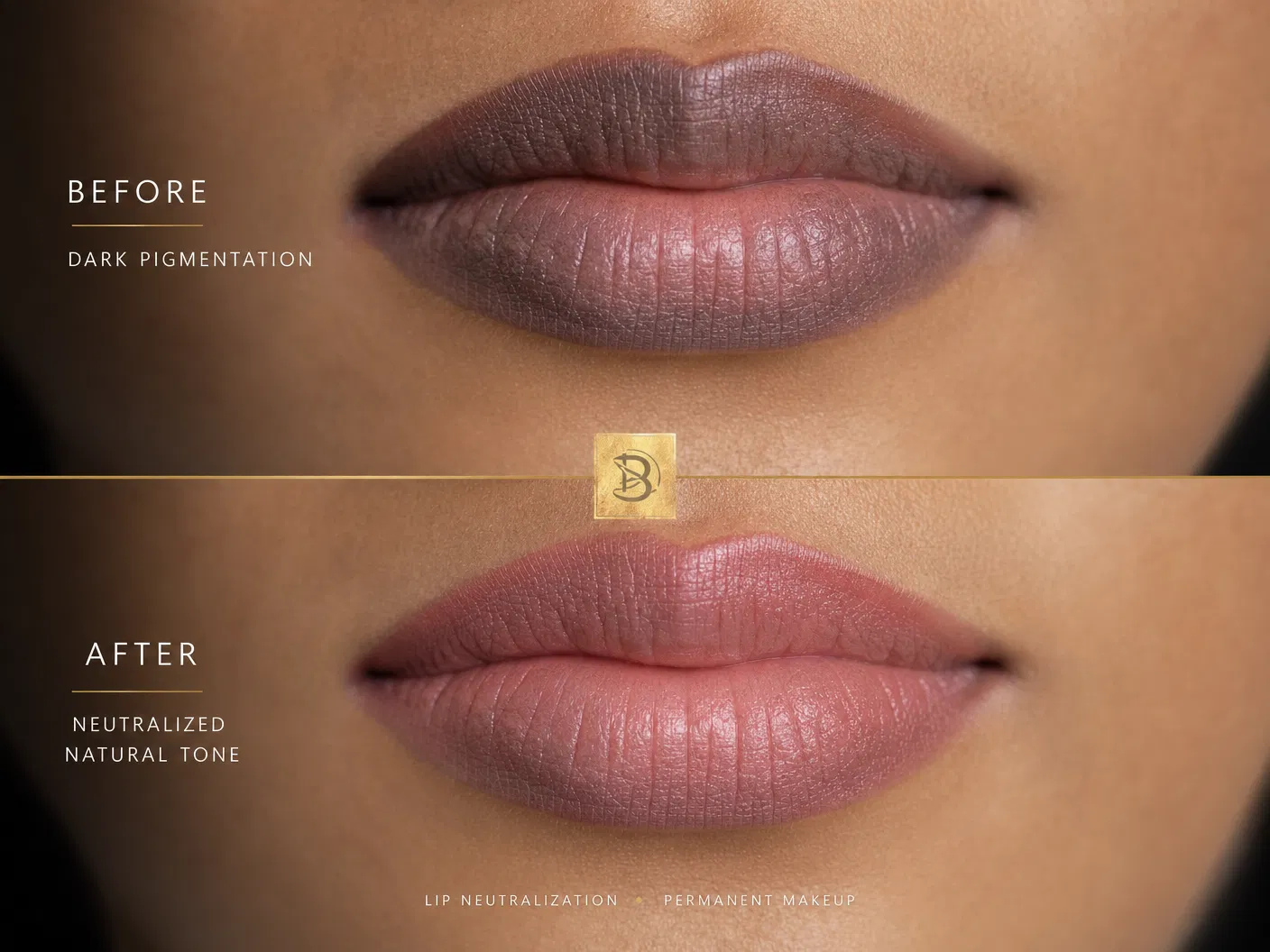
Judge the direction early—not the final shade
Immediately after treatment, you can check whether the work stayed within the agreed treatment area and whether you understand the written aftercare. You cannot reliably judge the final shade. Dark lip neutralization uses a corrective color direction selected in relation to the existing cool, brown, purple, grey or uneven tone. That means the fresh result can look orange, coral, red or simply brighter than the color you ultimately want.
Swelling, moisture, lighting and a phone camera can intensify that impression. Photograph the lips in even light if Eugene asks you to document healing, but label the image as fresh. Do not use it as proof that the lips will stay that color or compare it with another person’s healed result.
Early surface healing can make the color look less even
As the surface recovers, dryness and light flaking can interrupt the color you see. One area may look stronger while another appears pale. That temporary pattern does not tell you how much pigment has retained beneath healed tissue. Picking, rubbing or trying to exfoliate the uneven areas can interfere with healing and make the later result harder to assess.
Follow the written aftercare supplied for your appointment instead of combining routines from several studios or social-media posts. If an instruction is unclear, contact Eugene rather than improvising with a new product. Do not stop prescribed medication or copy someone else’s medication plan for a cosmetic tattoo; questions about your own medication belong with the clinician who prescribed it.
Weeks two through four can be the most confusing stage
Eugene Kay Beauty’s current dark-lip guide explains that color can appear lighter while the lips continue to recover during the following weeks. Clients sometimes describe this as the pigment disappearing. Others see patchiness or a return of the darker starting tone. At this point, the surface may look calmer even though the color is not ready for a final decision.
Keep photographs comparable: the same room or indirect daylight, no lipstick or tinted balm, and the mouth relaxed. A glossy fresh image beside a dry mid-healing image can create a false impression of either dramatic improvement or dramatic loss. The purpose of the record is to help a later assessment, not to diagnose the result day by day.
Around six to eight weeks, the healed base can be reviewed
The existing Eugene Kay Beauty neutralization guide describes reviewing the healed base around six to eight weeks. That review is the point for a more useful question: has the undertone become balanced enough to stop, does another corrective layer make sense, or is it appropriate to discuss a later lip-blush shade? The answer is individual and the schedule may change if the lips have not healed normally.
A healed review does not automatically mean another tattoo session. Eugene may recommend more time, continued neutralization, a later target color, a limited adjustment or no additional pigment. Natural melanin, previous tattooing, retention, tissue condition and your goal all affect that decision. Neutralization adds pigment; it does not bleach natural pigmentation or erase an old lip tattoo.
Separate a normal-looking color change from a health concern
Cosmetic tattooing breaks the skin, so symptoms that are worsening or not healing should not be treated as a color-planning problem. The U.S. Food and Drug Administration lists infection, allergic reactions, granulomas, keloid formation and removal difficulties among tattoo and permanent-makeup risks. FDA guidance also notes that complete removal without scarring may be impossible.
Contact a healthcare professional promptly for worsening or severe pain, spreading redness, drainage, fever, a rash or bumps, or another reaction that concerns you. Do not wait for a routine color review and do not cover an active problem with more pigment. If available, keep the pigment brand, shade and lot information because those details may help evaluate a suspected reaction.
A new, unexplained change in natural lip color, a persistent sore or another changing area should also be medically assessed before cosmetic tattooing. Eugene can evaluate cosmetic goals and visible healed pigment, but a permanent-makeup consultation is not a medical diagnosis.
- Color that looks warmer, brighter or temporarily uneven can be part of the cosmetic healing conversation.
- A treated area that is worsening, not healing or accompanied by systemic symptoms needs healthcare guidance.
- More pigment is not a treatment for an infection, reaction or unexplained lip change.
The healing record helps plan the next session
Before the healed review, gather the treatment date, previous lip tattooing or removal history, the number of sessions already completed, and clear photographs from before treatment, fresh treatment and the current healed stage. Share what changed without trying to choose the corrective pigment yourself. If another artist performed the work, include known pigment information and the original aftercare.
Define the smallest result that would satisfy you. Do you want less contrast between the upper and lower lip, a more even base, less cool undertone or a later visible lip-blush color? Those are different goals. A specific goal helps Eugene explain whether another neutralization stage would address it or whether adding pigment could create unnecessary saturation.
Ask what the next appointment is called and what it includes. An assessment, additional neutralization and a later decorative color session are not automatically the same service. Eugene Kay Beauty currently lists dark lip neutralization at $675, but confirm current pricing and the terms for any additional appointment directly before booking.
Plan a Burbank consultation without guessing your own stage
Eugene Kay Beauty is located at 1508 W Verdugo Ave, Burbank, CA 91506. You do not need to decide from a photograph whether you require a second session. When requesting a consultation, say when the procedure was performed, whether the lips are still changing, what you want to improve and whether any previous lip tattoo is present.
Message Eugene Kay on Instagram at https://www.instagram.com/eugenekay.beauty/ for consultation and booking. A useful message is: “I’m considering dark lip neutralization and want to understand the healing timeline before I book. I have no previous lip tattoo / I had previous work on [date]. May I send unfiltered daylight photos for an assessment?” If you already had treatment and the area is not healing normally, contact a healthcare professional first.
Explore Services and Los Angeles Areas
Related Los Angeles Guides
Frequently Asked Questions
Why do lips look orange after dark lip neutralization?
A fresh warm or orange direction may be part of balancing a cool or dark starting tone, and fresh pigment appears stronger than settled color. It is not a promise of the final shade. Follow your written aftercare and wait for the instructed healed review.
When can I judge the final lip neutralization color?
Eugene Kay Beauty’s current guide uses a healed review around six to eight weeks. Your timing may differ if the surface has not recovered normally, so confirm the review date for your appointment.
Is patchiness during healing always a failed result?
No. Dryness, flaking and uneven-looking mid-healing color can make retention difficult to judge. Do not pick the area or add pigment early. A healed assessment is needed unless symptoms require medical care.
Does healing tell me whether I need another session?
The healed base helps Eugene decide whether to stop, continue neutralization, discuss a later target color or avoid more pigment. There is no responsible universal session count based only on a search or first-day photo.
When should I seek medical help instead of waiting?
Seek healthcare guidance for worsening or severe pain, spreading redness, drainage, fever, a rash or bumps, an area that is not healing, or another reaction that concerns you. Do not cover an active problem with more pigment.
References
Ask About Your Healing Timeline
Message Eugene Kay on Instagram @eugenekay.beauty for a consultation and booking. Include previous lip tattooing, your treatment date if applicable, and unfiltered daylight photos if requested. Appointments take place at the Burbank studio.